


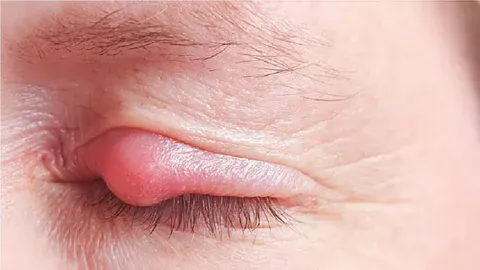
Are Styes Contagious? Eyelid Infection Reality vs. Myths (Plus Fast Healing Guide)
A stye itself is not contagious. The structural inflammation cannot be “caught” by another person. However, the Staphylococcus aureus bacteria living inside the pus can transfer to another person or your opposite eye through direct contact, potentially triggering a separate, new infection.
You wake up with a tender, red lump swelling at the edge of your eyelid. Your first instinct is to wonder whether you caught it from someone, or whether you could pass it on. These are completely valid concerns. The answer, however, requires separating two distinct biological events: the inflammatory response happening inside your eyelid, and the bacterial agent responsible for starting it. Understanding that distinction does not just clear up confusion. It actively shapes how quickly you recover and how effectively you prevent spreading the infection.
This guide covers the microbiology behind styes, explains why the contagion myth persists, maps out how styes differ from chalazions and pink eye, and walks you through a clinically grounded home care protocol.
What Is a Stye? The Biological Reality Behind Eyelid Bumps
The Microbial Culprit: Staphylococcus Aureus on the Eyelid
Staphylococcus aureus is a gram-positive bacterium that colonizes human skin naturally. It lives on the eyelids, inside the nose, and across large portions of the body’s surface without causing harm under normal conditions. A stye develops when this bacteria overgrows inside a specific glandular structure along the eyelid. Physical friction from rubbing, hormonal fluctuations, stress-related immune suppression, or cosmetic contamination can disrupt the local microbial balance and trigger the infection.
Anatomical Breakdown: External vs. Internal Hordeolum
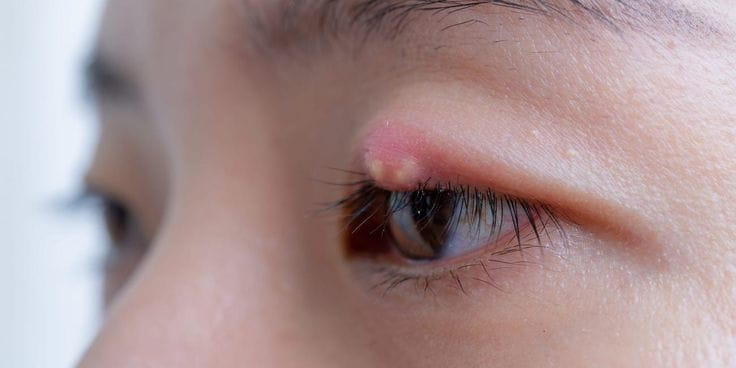
Not every eyelid bump originates from the same structure. An External Hordeolum forms when a hair follicle at the base of an eyelash becomes infected, producing the classic red, pimple-like lump directly on the lash line. An Internal Hordeolum develops deeper inside the eyelid when one of the Meibomian glands (the oil-secreting glands that lubricate the eye’s surface) becomes blocked and infected. Internal styes tend to feel more diffusely tender and may not be visible from the outer surface until they grow larger.
How Bacteria Spreads: Why People Falsely Believe Styes Are Contagious
Real-World Vectors of Secondary Bacterial Transmission
The confusion around stye contagion stems from a legitimate biological reality. The bacteria inside the stye’s pus absolutely can transfer to another person or a different location on your body. The most common transmission vectors include:
- Repeatedly touching or rubbing the infected eye, then touching a surface or another person
- Sharing pillowcases, towels, or washcloths with an infected individual
- Using contaminated mascara wands, eyeliner pencils, or makeup brushes across both eyes
- Wearing contact lenses with unwashed hands after touching the stye
The Contagion Myth vs. Bacterial Transfer: A Critical Distinction
Here is the nuance that most people miss. Contagion implies that the condition itself is transmissible, meaning direct exposure causes the same disease in the recipient. A stye does not work this way. If Staphylococcus aureus transfers from your stye onto someone else’s eyelid, that person’s immune system, skin microbiome, and glandular health all determine whether a new stye forms. Most exposures result in no infection at all. The bacteria are the mobile agent. The stye is simply the inflammatory consequence of one person’s biological response.
Stye vs. Chalazion vs. Pink Eye: The Diagnosis Matrix
Misidentifying an eyelid bump changes your recovery window completely. Use this comparative matrix to determine what you are dealing with before starting any home care.
| Clinical Feature | Stye (Hordeolum) | Chalazion | Pink Eye (Conjunctivitis) |
| Pain Level | Sharp, localized pain; highly tender | Mildly dull or entirely painless | Gritty, burning sensation across the entire eye |
| Physical Appearance | Looks like an angry red pimple along the lash line | A firm, smooth nodule further up the eyelid | Diffuse redness of the sclera (white part of the eye) |
| Discharge Type | Localized yellow pus center | No fluid discharge; hardened oil | Profuse watery or thick green/yellow mucus |
| Primary Driver | Acute bacterial infection | Chronic fluid blockage | Viral, bacterial, or environmental allergen |
A chalazion is frequently mistaken for a stye, but it forms from a blocked Meibomian gland rather than an infected one. Chalazions are not painful in the way a stye is, and they persist for weeks to months if untreated. Pink eye, by contrast, affects the entire conjunctival surface of the eye and almost always involves significant discharge and bilateral redness. If you are uncertain about your diagnosis, an ophthalmologist or general practitioner can confirm within minutes.
The Medical-Grade Warm Compress Protocol: Step-by-Step Recovery at Home
To clear the bacterial blockage without risking secondary infection or deep tissue scarring, follow these steps in order.
Step 1: Isolate and Sterilize Your Hands (Prerequisite)
Wash your hands thoroughly with warm water and liquid antibacterial soap for at least 20 seconds. Clean underneath your nails, where bacteria accumulate and are frequently overlooked.
Step 2: Execute a Thermal Compress (10 to 15 Minutes)
Submerge a fresh, clean washcloth in warm water at approximately 100 to 104 degrees Fahrenheit (never boiling). Wring out excess moisture and rest it flat over your closed eyelid. As the cloth cools, re-soak it to maintain consistent warmth throughout the session. Repeat this two to three times daily.
Step 3: Apply Targeted Micro-Massage (Post-Compress)
Using a clean, sterile cotton swab, apply very light pressure starting from the base of the eyelid and sweeping downward toward the lash line. This helps coax out softened lipid plugs and allows the blocked gland to drain naturally.
Step 4: Enforce a Cosmetic Freeze (Ongoing Care)
Completely halt the use of contact lenses and all eye makeup products. Dispose of any mascara or eyeliner used within 48 hours before the lump appeared. Reusing contaminated cosmetics is one of the most common causes of recurrent stye infections.
Expert Clinical Note: Never attempt to puncture or squeeze a stye using a pin, needle, or your fingernails. The eyelid contains a dense network of blood vessels and lymphatic channels. Forcing the stye open manually can rupture the internal walls of the gland and push the Staphylococcus aureus colony backward into the orbital cavity, dramatically increasing the risk of a serious secondary infection.
When a Stye Demands Immediate Medical Treatment
The majority of styes resolve within 7 to 10 days with consistent warm compress therapy. Several signs, however, indicate that home care is insufficient and professional intervention is required.
Red Flags Requiring Urgent Medical Attention
- Redness or swelling spreading beyond the eyelid and onto the cheek or surrounding facial tissue (a potential indicator of preseptal cellulitis, a bacterial infection of the tissue in front of the orbital septum)
- Any degree of blurred or altered vision
- A stye showing no improvement after 48 hours of diligent warm compress therapy
- Fever accompanying the localized infection
- Rapid enlargement of the eyelid lump within a 24-hour period
Clinical Interventions: What Doctors Actually Do
A physician managing a persistent or complicated stye has two primary treatment pathways. Topical antibiotic therapy, typically erythromycin or bacitracin ointment, is prescribed for superficial external styes or as a preventive measure following natural drainage. Oral antibiotics, such as doxycycline or dicloxacillin, are reserved for cases involving spreading cellulitis or recurrent infections tied to a broader Staphylococcal colonization issue. For styes that fail to drain on their own, a minor surgical incision and drainage (I&D) procedure performed under local anesthesia allows the physician to release the pus through a controlled, sterile incision, dramatically shortening recovery time.
The Bottom Line on Stye Transmission and Recovery
A stye is not a contagious condition in the traditional sense. What makes it feel socially risky is the live bacteria inside the pus, which can transfer through shared objects or direct skin contact and potentially seed a new infection in someone else. The distinction matters because it directly informs your behavior during recovery: diligent hand hygiene, solo towels and pillowcases, and disposed makeup products are not excessive caution. They are the precise actions that prevent bacterial spread without requiring isolation—much like practicing proper hygiene when treating other common localized infections such as foot fungus.
Most styes clear within a week. Consistent warm compresses, cosmetic restraint, and hands kept away from your face accomplish the bulk of the recovery work. For anything spreading beyond the eyelid, affecting your vision, or failing to improve, see a doctor promptly.
Frequently Asked Questions About Styes
Can I go to work or school with a stye?
Yes. A stye itself does not spread through the air or casual proximity. Standard hygiene precautions (frequent handwashing, avoiding eye touching) are sufficient for most workplace and school settings.
How long does a stye typically last?
Most styes resolve within 7 to 10 days with consistent warm compress treatment. Internal hordeola, which form deeper inside the eyelid, may take slightly longer.
Can a stye spread to my other eye?
The stye itself will not migrate. However, Staphylococcus aureus bacteria can transfer from the infected eye to the healthy eye if you touch the stye and then rub the other eye without washing your hands first.
Should I wear eye makeup while treating a stye?
No. All eye cosmetics should be discontinued until the stye has fully resolved. Any makeup applied during infection may become contaminated and reintroduce bacteria once you resume use.
Is a chalazion the same as a stye?
No. A chalazion is a chronic, non-infectious blockage of a Meibomian oil gland. It is painless, slow-developing, and does not contain active bacteria. A stye is an acute bacterial infection that is painful and develops rapidly.
When should I see a doctor for a stye?
Seek medical attention if the stye does not improve within 48 hours of home care, if swelling spreads to the cheek or face, if your vision changes at all, or if you develop a fever alongside the eyelid lump.
Looking for more trusted medical information? Browse our collection of health and wellness guides.
Bacterial eyelid infections like a stye can sometimes progress to involve the surrounding conjunctiva, at which point a physician may prescribe Obivin alongside standard warm compress therapy for a stye to clear the infection faster.