



Obivin is a prescription ophthalmic solution containing Tobramycin (0.3%), an aminoglycoside antibiotic that eliminates bacterial eye infections by halting protein synthesis. Obivin D adds Dexamethasone (0.1%), a corticosteroid that simultaneously reduces inflammation making it the preferred option when redness and swelling accompany the infection.
Monograph reviewed in accordance with clinical ophthalmic pharmacology guidelines.
Waking up with eyelids crusted shut, a burning sensation, and whites of your eyes that look anything but white is deeply unsettling. More often than not, these signs point to a bacterial infection one your doctor is likely to manage with a prescription for Obivin. But what exactly is in that small bottle? How does it work, and why does the “D” version exist? Understanding the answers helps you use this medication correctly and recover faster.
What Is Obivin, and How Does It Differ from Obivin D?
Obivin is a sterile ophthalmic solution built around one active ingredient: Tobramycin at a concentration of 0.3%. Tobramycin belongs to the aminoglycoside class of antibiotics, a family known for broad-spectrum activity against gram-negative and several gram-positive bacteria that commonly colonize ocular tissue.
Obivin D is the combination formulation. It retains the same 0.3% Tobramycin but layers in Dexamethasone at 0.1% a synthetic corticosteroid. The rationale is straightforward: bacterial infections rarely arrive without an inflammatory response. Prescribing both agents in one bottle addresses the infection and its painful aftermath simultaneously, reducing the need for a separate anti-inflammatory drop.
The Dual-Action Pharmacodynamics: How Does Obivin Work at the Molecular Level?
How Tobramycin Eliminates Bacteria
Tobramycin enters bacterial cells and binds irreversibly to the 30S ribosomal subunit the molecular machinery bacteria depend on to read messenger RNA and synthesize proteins. Once this binding occurs, the ribosome begins misreading the genetic code. The result is the production of aberrant, nonfunctional proteins that the bacterial cell cannot use for survival or replication. Without the ability to build the structural proteins it needs, the pathogen dies. This mechanism is bactericidal, meaning Tobramycin does not merely suppress bacteria it kills them outright.
How Dexamethasone Controls Inflammation (Obivin D Only)
The Dexamethasone component targets the inflammatory cascade through a different pathway entirely. Corticosteroids like Dexamethasone inhibit phospholipase A₂, the enzyme responsible for releasing arachidonic acid from cell membranes. Arachidonic acid is the precursor to prostaglandins the chemical mediators that signal blood vessel dilation, recruit white blood cells, and generate the pain and swelling you feel. By cutting off this supply chain early, Dexamethasone suppresses the migration of polymorphonuclear leukocytes into ocular tissue, calming the redness and edema without interfering with the antibiotic’s antibacterial work.
What Conditions Does Obivin Treat?
Physicians prescribe Obivin and Obivin D across several well-defined clinical scenarios:
- Bacterial Conjunctivitis: The most common indication. Tobramycin eradicates the bacterial load on the conjunctival surface the thin, clear membrane covering the white of the eye restoring clarity and comfort within days.
- Blepharitis: Chronic or acute bacterial inflammation along the eyelid margin responds well to topical Tobramycin, reducing the crusting and tenderness associated with this condition.
- Post-Surgical Prophylaxis: Following procedures such as cataract extraction, both infection prevention and inflammation control are clinical priorities. Obivin D is particularly suited to this context because it addresses both concerns with a single drop.
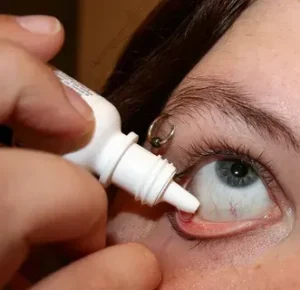
How to Apply Obivin Eye Drops Correctly: The Nasolacrimal Occlusion Method
Application technique has a measurable impact on how much active drug actually reaches the eye and how much enters the bloodstream unnecessarily. Follow this sequence precisely:
- Wash your hands thoroughly before opening the dropper bottle.
- Tilt your head back and use a clean finger to gently pull the lower eyelid downward, forming a small pouch.
- Instill exactly one drop into the pouch. Keep the nozzle tip clear of the eyelid, eyelashes, and cornea to prevent contamination.
- Close your eye gently do not squeeze it shut, as this expels the drop.
- Apply gentle pressure to the inner corner of the eye (the punctum, located near the bridge of the nose) for a full 60 seconds.
That final step is called nasolacrimal occlusion, and it is the detail most patients overlook. The nasolacrimal duct connects the inner corner of the eye directly to the nasal passage and, from there, to the systemic circulation. Without occlusion, a significant portion of the drop drains through this channel and is absorbed into the bloodstream rather than remaining in contact with the ocular surface. Blocking the duct for one minute maximizes local drug concentration and minimizes any systemic exposure a small action with a clinically meaningful outcome.
Critical Precautions and Contraindications
| Parameter | Ophthalmic Protocol | Clinical Rationale |
| Contact Lenses | Remove before instillation; wait 15 minutes to reinsert | Benzalkonium chloride, the preservative in most ophthalmic solutions, binds to soft lens material and can cause corneal irritation |
| Viral or Fungal Infections | Strictly contraindicated | The corticosteroid in Obivin D suppresses the immune response that contains viral and fungal pathogens, allowing unchecked proliferation |
| Treatment Duration | Do not exceed 10–14 days without physician monitoring | Prolonged corticosteroid use at the ocular surface is associated with elevated intraocular pressure and corneal thinning, both of which can cause lasting damage |
| Pregnancy & Breastfeeding | Use only under explicit medical supervision | Systemic absorption, though minimal, warrants careful risk-benefit assessment |
The contraindication for viral and fungal infections deserves special emphasis. Bacterial and viral conjunctivitis can present with near-identical symptoms. Using Obivin on a viral infection particularly one caused by herpes simplex virus does nothing to combat the pathogen and may allow the corticosteroid component to worsen the clinical picture significantly. A proper diagnosis before initiating treatment is not optional.
Frequently Asked Questions About Obivin Eye Drops
Can Obivin eye drops be used to treat viral pink eye?
No. Obivin contains an aminoglycoside antibiotic that targets bacterial protein synthesis exclusively. Obivin has zero efficacy against viral pathogens such as adenoviruses, and using it unnecessarily accelerates localized bacterial resistance without addressing the actual cause of the infection.
Why does vision blur temporarily after applying Obivin?
The viscosity of the ophthalmic solution briefly disrupts the tear film across the corneal surface upon instillation. This transient blurring typically resolves within two minutes as natural blinking redistributes the solution evenly. Avoid driving or operating machinery during this brief adjustment window.
What should I do if I miss a dose of Obivin?
Instill the missed drop as soon as you remember. If the next scheduled dose is imminent, skip the missed application entirely and continue with your regular schedule. Doubling up doses does not accelerate recovery and increases the risk of localized irritation.
A Targeted Therapeutic Used Wisely
Obivin and Obivin D occupy a precise niche in ophthalmic medicine. Obivin delivers focused antibacterial action through Tobramycin’s irreversible ribosomal binding mechanism. Obivin D extends that coverage into the inflammatory domain through Dexamethasone’s phospholipase inhibition. Together, they represent a well-matched dual strategy for bacterial ocular infections accompanied by inflammation particularly in post-surgical settings where both risks are simultaneously elevated. For individuals navigating post-surgical recovery or addressing broader bodily changes, resources like the guide on struggling with an apron belly when diet and exercise won’t fix it offer useful insights into structural recovery options.
Their effectiveness, however, depends heavily on correct diagnosis, proper administration technique, and disciplined adherence to duration limits. A medication this targeted performs best when used with an equally targeted understanding of what it does and what it cannot.
Have questions about managing recovery after eye surgery, or want deeper clinical insights delivered directly to your inbox? Subscribe to our medical insight digest below, or leave a comment and our team will respond.
Topical antibiotic therapy, typically erythromycin or bacitracin, is the standard first-line option, though for more complicated or post-surgical bacterial eye infections, physicians sometimes turn to a broader-spectrum option like Obivin (Tobramycin) eye drops.