


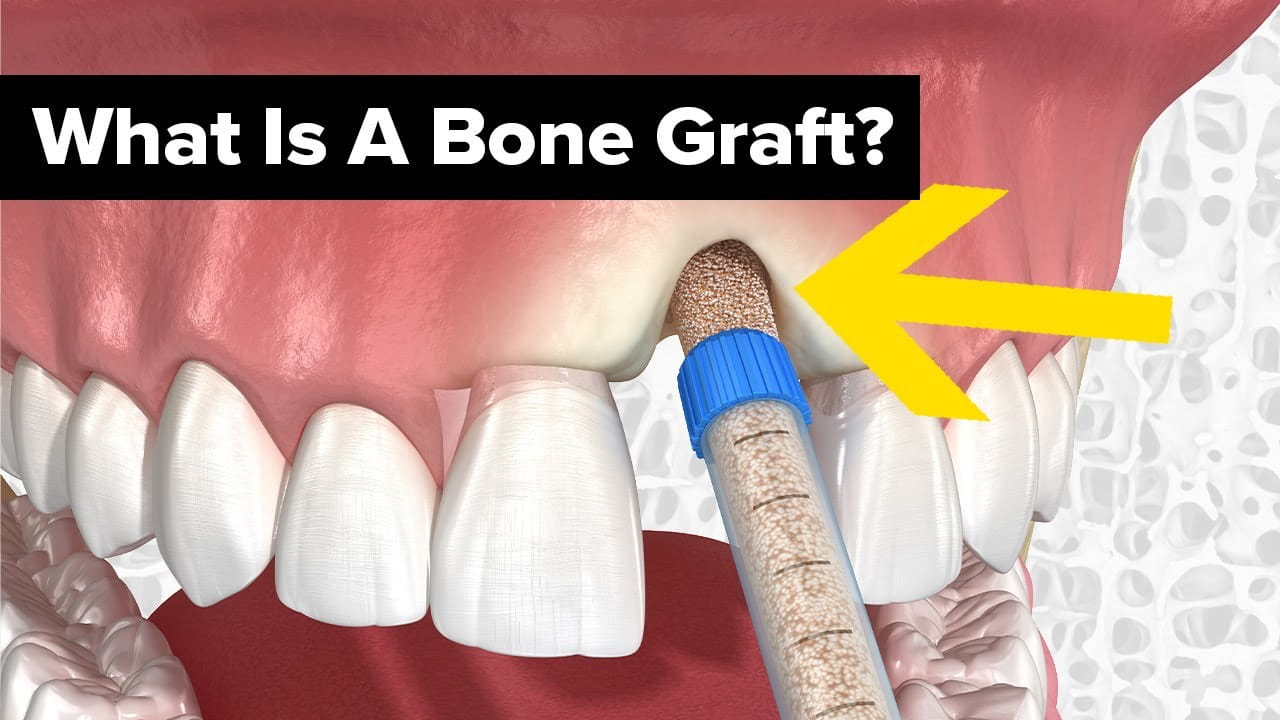
A bone graft for a tooth implant is a routine oral surgery that rebuilds missing jawbone volume, creating a solid foundation to anchor a dental implant. Oral surgeons or periodontists place natural or synthetic bone material into the jaw defect, which acts as a scaffold while the body regenerates new bone tissue over 3 to 9 months. This procedure prevents implant failure and ensures long-term structural support for replacement teeth.
Hearing “you don’t have enough bone for an implant” can feel like a dead end. For many patients, that single sentence makes dental restoration feel permanently out of reach. The truth is far more encouraging.
Jawbone loss after tooth extraction is remarkably common. Research consistently shows that the jawbone can lose up to 25% of its width within the first year following a tooth extraction. This happens because the bone beneath a missing tooth no longer receives the mechanical stimulation it needs to maintain its density. Over time, the ridge narrows, flattens, and becomes structurally insufficient to support an implant fixture.
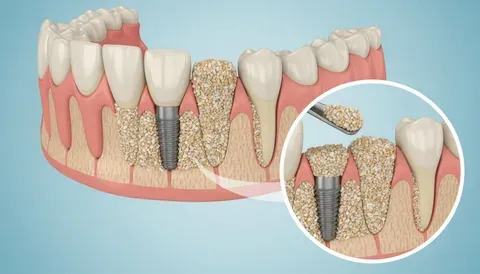
A dental bone graft reverses that process. By surgically introducing bone material into the deficient site, oral surgeons create a scaffold on which the body can regenerate its own living tissue. The result is a rebuilt ridge strong enough to hold a titanium implant securely for decades.
This guide covers everything you need to understand before scheduling a consultation: why the procedure is necessary, which grafting materials are available, what happens during the surgical appointment, and how the recovery unfolds week by week.
Why Is a Bone Graft Necessary Before Getting a Dental Implant?
Dental implants work through a biological process called osseointegration. The titanium post embedded into the jawbone must fuse directly with surrounding bone tissue to form a permanent anchor. Without adequate bone volume surrounding every surface of the fixture, osseointegration either fails entirely or produces an unstable result that deteriorates over time.
Clinically, implant surgeons require a minimum of 1.5 mm to 2 mm of healthy bone on every side of the implant. They also require sufficient vertical height to avoid encroaching on critical anatomy including the inferior alveolar nerve in the lower jaw and the maxillary sinus floor in the upper back jaw.
Three primary conditions commonly deplete jawbone to below these thresholds:
Tooth loss and disuse atrophy. The jawbone depends on the compressive forces generated during chewing to maintain its cellular activity. When a tooth root disappears, the bone beneath it stops receiving those signals. Osteoclast activity outpaces osteoblast activity, and the ridge resorbs progressively. This process begins within weeks of extraction and continues for years afterward.
Advanced periodontal disease. Bacterial infection deep within the gum pocket destroys the alveolar bone surrounding natural teeth. Chronic periodontitis can silently erode bone support long before patients notice discomfort. By the time affected teeth are extracted, significant structural damage is already present. If you want to understand more about how early dental problems escalate, What Does a Cavity Look Like? on Trusted Topics covers the progression from minor decay to more serious structural compromise.
Sinus pneumatization. When upper back molars are lost, the maxillary sinus cavities situated just above them gradually expand downward into the vacated space. This natural process leaves very little vertical bone between the sinus floor and the ridge surface, making standard implant placement anatomically impossible without a specialized sinus lift grafting procedure.
What Are the 4 Main Types of Dental Bone Graft Materials?
Surgeons select grafting materials based on the size and location of the defect, the patient’s medical history, and how quickly bone regeneration needs to occur. Each of the four main categories carries a distinct biological mechanism and clinical profile.
| Graft Type | Material Source | Primary Advantage | Integration Speed |
| Autograft | Harvested from the patient’s own body (chin, jaw, or hip) | Highest success rate; contains living osteoinductive cells | 3 to 4 months |
| Allograft | Donated human tissue from a licensed cadaveric tissue bank | Eliminates a second surgical harvest site | 4 to 6 months |
| Xenograft | Specially treated animal bone (bovine or porcine origin) | Excellent long-term scaffold; resorbs slowly and predictably | 6 to 9 months |
| Alloplast | Fully synthetic mineral compounds such as hydroxyapatite | Zero risk of disease transmission; immediately available | 6 to 9 months |
Autografts remain the gold standard for large defects because the harvested tissue contains osteogenic cells capable of directly forming new bone, as well as growth factors that stimulate surrounding tissue to participate in regeneration. The trade-off is a second surgical site, which adds operative time and a separate recovery area.
Allografts sourced from accredited tissue banks undergo rigorous processing to eliminate any pathogen risk while preserving the collagen framework that guides new bone growth. For moderate defects, allograft material produces outcomes comparable to autografts without the morbidity of donor site harvesting.
Xenografts, most commonly derived from bovine bone mineral, maintain their scaffold architecture for an extended period. This slow resorption rate makes xenografts particularly effective for large lateral ridge augmentations where sustained volume support is critical during the months of active bone regeneration.
Alloplasts composed of synthetic calcium phosphate ceramics offer a fully controlled and standardized product. Because the material carries no biological origin, alloplasts appeal strongly to patients with specific medical, dietary, or ethical considerations.
What Happens During a Dental Bone Grafting Procedure?
The appointment typically takes between 45 minutes and two hours depending on defect size and graft type. Most procedures are performed in an oral surgery or periodontist office under local anesthesia, with oral or intravenous sedation available for patients who prefer deeper relaxation.
Step 1: Anesthesia and sedation. The surgeon injects local anesthetic directly around the target site until the area is completely numb. Patients who have chosen sedation receive their medication at this stage and are monitored continuously throughout the procedure.
Step 2: Incision and site preparation. A precisely placed incision through the gum tissue exposes the underlying jawbone. The surgeon cleans and debrides the defect thoroughly, removing any remnant fibrous tissue that could interfere with bone integration.
Step 3: Graft material placement. The chosen material arrives in the form of granules, powder, putty, or a solid block depending on the product and defect geometry. The surgeon packs the material firmly into the bone defect to eliminate dead space and maximize contact with surrounding native bone.
Step 4: Membrane layering. A barrier membrane cut to size is placed over the packed graft material. This membrane serves a critical biological purpose: it physically prevents rapidly proliferating soft tissue cells from migrating into the graft site before the slower-growing bone cells have had time to populate the scaffold. Resorbable membranes dissolve on their own over weeks; non-resorbable membranes require a brief second appointment for removal.
Step 5: Suturing and closure. The surgeon carefully repositions the gum tissue flap over the graft site and closes the incision with surgical sutures. Tension-free closure protects the underlying material and promotes uninterrupted healing.
What Is the Recovery and Healing Timeline for a Dental Bone Graft?
Healing from a dental bone graft occurs across two distinct biological phases. Soft tissue recovery is visible and relatively quick. Deep osseous maturation is invisible and takes considerably longer.
Days 1 through 7 (initial healing). Swelling peaks around the second or third day and then gradually subsides. Mild discomfort managed with prescribed pain medication is expected. Minor oozing from the incision line during the first 24 hours is normal. The gum tissue begins closing over the surgical site during this first week.
Weeks 2 through 4 (early vascular integration). Non-resorbable sutures, if used, are removed around the two-week mark. Blood vessels from surrounding tissue begin growing into the graft scaffold, which is the first critical step toward cellular colonization. The overlying gum tissue appears largely healed from the outside, though the deeper remodeling process has only just begun.
Months 3 through 6 (active bone regeneration). Osteoblasts, the cells responsible for forming new bone matrix, begin replacing the graft scaffold with living mineralized tissue. This stage is where the actual jawbone reconstruction occurs. Patients may notice no external signs of this phase, but the internal transformation is substantial.
Months 6 through 9 and beyond (final structural maturation). The regenerated bone achieves full mineral density and mechanical strength. A three-dimensional cone beam computed tomography scan (CBCT) taken at this stage allows the implant surgeon to measure the new bone volume precisely and confirm that the site meets implant placement criteria.
For patients who are also dealing with dental infections or associated conditions, understanding how root-related procedures interact with implant planning can be helpful. The RCTS Dental: Step-by-Step Guide to Root Canal article on Trusted Topics explains how root canal treatment and extraction timing affect the surrounding bone, which directly influences grafting decisions.
What Aftercare Steps Ensure Bone Graft Success?
The grafting material placed during surgery has no inherent mechanical stability in its first days. It depends entirely on the patient’s compliance with post-operative instructions to remain undisturbed while the surrounding tissue begins the anchoring process.
Diet modification. A soft food protocol for the first 7 to 10 days removes chewing pressure from the surgical site. Suitable options include smoothies, scrambled eggs, mashed vegetables, and lukewarm soups. Foods that are hard, crunchy, or require significant biting force risk physically displacing graft granules before the site has consolidated.
Pressure avoidance. Negative oral pressure, generated by spitting forcefully, drinking through a straw, or smoking, can dislodge graft material that has not yet integrated with surrounding bone. This risk is highest during the first 72 hours but remains relevant for the full first week.
Medication compliance. Prescribed antibiotics must be completed in full to prevent bacterial contamination of the graft site. Antimicrobial mouth rinses, when recommended, should be used gently.
Resisting the urge to inspect. A common patient mistake involves pulling the lip back to visually check the stitches or rinsing vigorously on the day of surgery, both of which disturb the blood clot protecting the graft. The appropriate approach on day two is to allow warm salt water to gently roll out of the mouth without any active spitting motion, leaving the surgical site completely undisturbed.
Smoking carries a particularly significant risk beyond the first week. Nicotine restricts blood flow to the healing tissue and impairs the osteoblast activity required for bone regeneration. Patients who smoke face substantially higher graft failure rates and are typically counseled to cease smoking for a minimum of several weeks before and after surgery.
Frequently Asked Questions
How long after a bone graft can you get a tooth implant?
Most patients wait 3 to 9 months after a dental bone graft before implant placement. The exact timeline depends on the graft type and defect size. A CBCT scan taken at the 6-month mark typically confirms whether sufficient bone density has been achieved. Autografts integrate fastest, often within 3 to 4 months, while xenografts and alloplasts may require closer to 6 to 9 months.
Is getting a bone graft for a dental implant painful?
The procedure itself is performed under local anesthesia and patients report feeling pressure rather than pain during surgery. Post-operative discomfort is typically described as moderate and manageable with prescribed pain medication for the first 3 to 5 days. Swelling around the jaw peaks at 48 to 72 hours and resolves within the first week for most patients.
What happens if you don’t get a bone graft before an implant?
Placing an implant into a site with insufficient bone volume significantly increases the risk of implant failure. Without adequate bone surrounding the titanium fixture, osseointegration cannot occur properly. The implant may fail to integrate, become mobile, or cause ongoing discomfort. In some cases, a failed implant must be removed and the site grafted before a second placement attempt can be considered.
How do I know if my dental bone graft is failing?
Signs of graft failure include persistent or worsening pain beyond the first week, visible exposure of white granular material through the gum tissue, swelling that increases rather than subsides after day three, an unpleasant taste or odor indicating infection, and gum tissue that appears to be receding or pulling away from the surgical site. Any of these symptoms warrant immediate contact with the treating surgeon.
Can a bone graft and tooth implant be placed on the same day?
In selected cases, yes. When bone volume loss is minimal, some surgeons perform simultaneous grafting and implant placement in a single appointment. This approach reduces overall treatment time but requires specific clinical conditions including adequate native bone to achieve primary implant stability. For patients with significant bone deficits, staged treatment, meaning grafting first and implanting after full healing, produces more predictable outcomes.
What is the average cost of a bone graft for a tooth implant?
Bone graft costs vary widely based on graft type, defect size, and geographic location. A minor socket preservation graft performed at the time of extraction typically ranges from $300 to $800. Larger lateral ridge augmentations or sinus lift procedures can range from $1,500 to $3,000 or more. These figures do not include the cost of the implant itself. Dental insurance occasionally covers grafting when it is documented as medically necessary following extraction.
Your Path to a Stable, Long-Lasting Implant Starts Here
A dental bone graft transforms a compromised jawbone into a viable implant site. The procedure is well-established, the materials are rigorously tested, and the outcomes for patients who follow post-operative protocols are consistently strong. What may initially sound like an obstacle is, in clinical practice, a reliable and routine preparatory step.
The variables that matter most are selecting the appropriate graft material for the specific defect, timing the implant placement correctly after confirmed bone maturation, and protecting the surgical site during the critical early weeks of healing.
Concerned about jawbone volume before your implant consultation? Schedule a 3D CBCT scan with a qualified dental implant specialist at [Your Practice Name] to assess your current bone levels and determine the right treatment sequence for your situation, while reviewing comprehensive medication resources like the Cabvon Vonoprazan uses and side effects guide for complete care planning.
For related oral health topics, explore the Trusted Topics Health section for evidence-based guides written in clear, accessible language.
Left untreated long enough, advanced decay can lead to tooth loss and the bone density issues that follow; our guide to bone grafting before a dental implant covers what happens if a tooth reaches that point.
In rarer cases where a tooth cannot be saved even with treatment, extraction followed by a dental bone graft becomes the next step toward restoring the site for a future implant.