


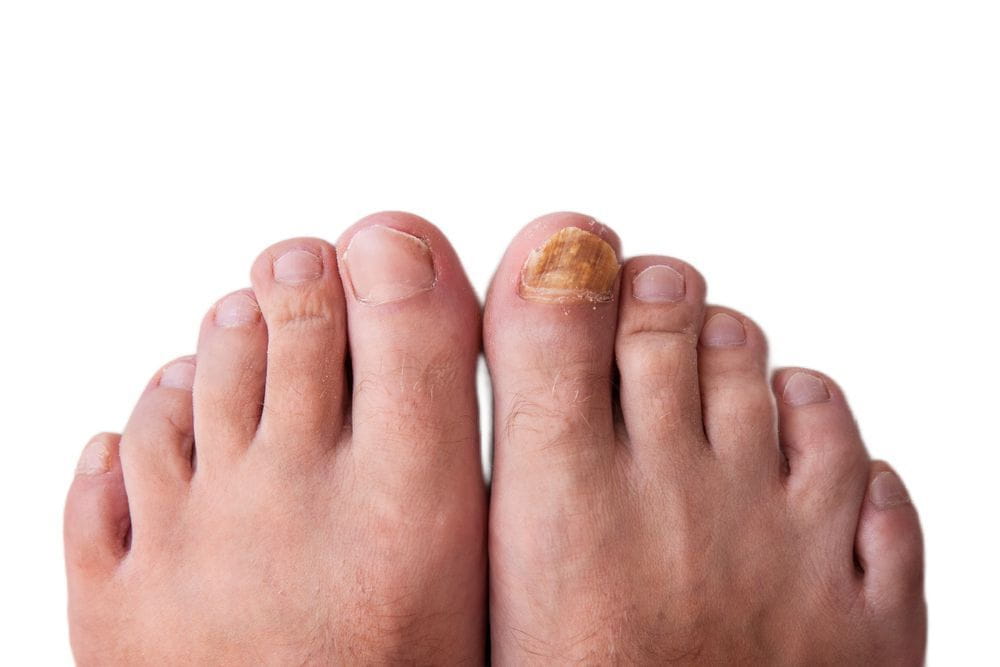
Mild foot fungus (also known as athlete’s foot) can be managed through rigorous hygiene and targeted over-the-counter antifungal treatments. However, anecdotal natural remedies like coconut oil and vinegar do not fully eradicate fungal spores at their root. Left untreated, the infection can permanently migrate to the toenails, resulting in a far more difficult condition to treat.
Foot fungus is one of the most widespread dermatological conditions on the planet, yet it remains one of the most mismanaged. People reach for coconut oil, soak their feet in apple cider vinegar, and stuff their shoes with paper towel vinegar bags after reading forum advice. The infection returns. Sometimes it worsens. Occasionally, it migrates somewhere far more stubborn.
This guide cuts through the noise. You will learn the biological mechanics behind foot fungus, understand why popular natural remedies fall short of clinical thresholds, and follow a step-by-step eradication protocol built on mycological science rather than anecdote.
What Exactly Is Foot Fungus? The Mycological Breakdown
Foot fungus, clinically named Tinea Pedis and colloquially known as athlete’s foot, is caused by a group of microscopic organisms called dermatophytes. The primary culprit is Trichophyton rubrum, an exceptionally resilient fungal species that metabolizes keratin, the structural protein found in human skin, nails, and hair. Because keratin is abundant on the feet and toenails, dermatophytes thrive there with remarkable efficiency.
Three distinct clinical presentations exist, and identifying which type you have informs which treatment approach will work fastest.
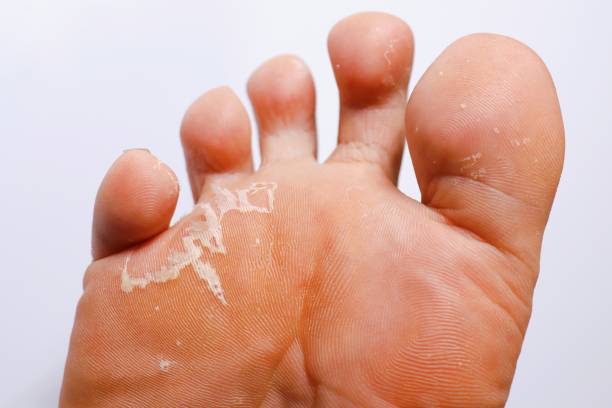
Interdigital Tinea Pedis develops in the moist webbing between the toes, most commonly between the fourth and fifth digits. Symptoms include soggy, peeling white skin and a distinct musty odor.
Moccasin-type Tinea Pedis presents as chronic, chalky scaling across the entire sole and heel. Many people mistake this form for persistent dry skin, which delays antifungal treatment and allows the infection to deepen.
Vesicular Tinea Pedis is the least common and most acutely painful form. It produces clusters of fluid-filled blisters on the arch and sole, often appearing suddenly after a period of warm weather or excessive sweating.
Deconstructing “Natural Cures” Versus Clinical Realities
Does coconut oil or tea tree oil actually kill foot fungus?
This is perhaps the most important distinction a sufferer can understand. There is a meaningful pharmacological difference between a fungistatic agent (one that inhibits fungal growth) and a fungicidal agent (one that actively kills the fungus). Coconut oil and undiluted tea tree oil are, at best, mildly fungistatic under laboratory conditions.
Tea tree oil requires a concentration of 25 to 50 percent to approach the efficacy of commercial antifungals, according to published dermatology research. At that concentration, the risk of triggering severe contact dermatitis is substantial. The skin around the foot becomes inflamed, cracked, and even more vulnerable to secondary bacterial infection. Commercial antifungal creams containing Terbinafine or Clotrimazole are formulated to be both fungicidal and well-tolerated by skin tissue. There is no comparison at a therapeutic level.
Can vinegar towels in shoes really sterilize footwear?
A persistent piece of online advice involves placing vinegar-soaked towels inside shoes sealed in paper bags overnight to eliminate fungal spores. The science does not support this. Dermatophyte spores are built for survival. They nest deep within the fibrous microclimates of shoe insoles, where humidity is stable, light exposure is zero, and airflow is minimal. Acetic acid (vinegar) does not penetrate those microfibers at the concentrations achievable through a damp towel.
What does work: UV sanitizer devices designed specifically for footwear, or antifungal powders containing Miconazole applied directly to the insole. These approaches target the fungal spores at their actual habitat rather than creating surface-level moisture that can compound the problem.
Foot Fungus vs. Eczema vs. Dry Skin: How to Tell the Difference
Treating a fungal infection as standard dry skin will cause the fungus to multiply unchecked. Treating eczema with an antifungal cream can disrupt the skin microbiome without addressing the underlying immune response. Accurate identification is the first therapeutic step.
| Visual and Physical Symptoms | Foot Fungus (Tinea Pedis) | Dyshidrotic Eczema | Severe Dry Skin (Xerosis) |
| Primary Location | Webbing between the 4th and 5th toes, or scaling across soles | Sides of the toes, palms of hands, and deep edges of soles | Entire heel and pressure points of the foot |
| Itch Profile | Intense, burning itch that worsens immediately when socks are removed | Deeply set, throbbing itch that precedes a breakout | Minimal itching; primarily painful due to deep cracking |
| Physical Texture | Peeling, soggy white skin or chalky, fine silver scaling | Clusters of tiny, deeply embedded, fluid-filled blisters | Rough, thick plaques with yellow or white deep fissures |
| Odour Presence | Frequently accompanied by a distinct, musty odor | No associated odor unless a secondary infection occurs | Entirely odorless |
If your symptoms align with dyshidrotic eczema, a dermatologist evaluation is warranted before initiating any antifungal treatment.
The Medical-Grade Fungal Elimination Protocol
The following sequence, executed consistently, represents the evidence-supported standard for clearing Tinea Pedis and preventing recurrence.
Step 1: The High-Friction Wash (Twice Daily)
Scrub your feet using lukewarm water and an antifungal defense soap. Direct deliberate attention to the webbed spaces between every toe. These crevices trap moisture and create the precise microclimate in which dermatophytes replicate most aggressively.
Step 2: Enforce Absolute Desiccation (Critical Step)
Blot your feet completely dry with a clean towel or direct a hair dryer on a cool setting across all surfaces, including between the toes. Fungal replication is moisture-dependent. Any residual dampness at the application site substantially reduces the efficacy of topical antifungals.
Step 3: Apply a Fungicidal Agent (7 to 14 Days)
Apply a thin layer of over-the-counter antifungal cream containing Terbinafine or Clotrimazole to the affected zone, extending approximately one inch beyond the visible border of the rash. This margin matters because dermatophytes colonize skin tissue ahead of visible symptomatic presentation. Continue application for a full seven days after all symptoms resolve to eradicate latent spores.
Step 4: Microclimate Management (Ongoing Care)
Dust the interior of your shoes daily with an antifungal powder containing Miconazole. Never wear the same pair of shoes on consecutive days. Footwear requires a minimum of 24 hours to dehumidify, and this drying period must occur away from dark, enclosed closets where ambient moisture accumulates.
Clinical Pearl (E-E-A-T): Patients managing diabetes or peripheral neuropathy should never attempt to self-treat foot fungus with home remedies or over-the-counter products without medical supervision. Even minor fungal fissures can function as a biological entry point for aggressive bacterial infections such as cellulitis, which can rapidly compromise deeper tissue and systemic health.
The Hidden Danger: When Foot Fungus Moves to Your Nails
How does untreated athlete’s foot lead to toenail fungus (onychomycosis)?
Tinea Pedis and onychomycosis exist on the same pathological spectrum. When dermatophytes colonize the skin surrounding the nail bed for an extended period, they exploit microscopic gaps between the nail plate and the hyponychium (the skin beneath the free edge of the nail) to migrate into the nail itself.
Once established within the nail matrix, the infection transitions from Tinea Pedis to onychomycosis, a condition characterized by nail thickening, yellowing, brittleness, and subungual debris accumulation. Onychomycosis is notoriously resistant to topical treatment because the nail plate physically blocks antifungal penetration. Oral systemic antifungals such as Terbinafine tablets are typically required for 6 to 12 weeks, and treatment success rates remain lower than for skin-based infections.
When should you see a podiatrist for foot fungus?
Seek professional evaluation promptly if any of the following are present: deep fissuring or open cracking of the skin, signs of secondary bacterial infection (warmth, redness radiating beyond the affected zone, yellow crusting or pus), systemic swelling of the foot or ankle, or a known diagnosis of diabetes or compromised vascular circulation. These presentations exceed the scope of self-managed over-the-counter care.
Stop the Cycle Before It Starts
Foot fungus is eminently treatable when addressed with the correct pharmacological agents, applied with procedural consistency, and supported by rigorous footwear hygiene. Natural remedies may offer marginal supportive benefit in some cases, but no published clinical evidence supports their use as a primary treatment strategy. Understanding common infections and how they spread—such as learning are styes contagious—is similarly important for maintaining overall personal hygiene and health.
The difference between a cleared infection and a chronic, nail-embedded one often comes down to a single decision: acting on verified science rather than waiting for home remedies to produce results they were never formulated to deliver.
If your symptoms persist beyond two weeks of consistent antifungal treatment, or if toenail involvement is already visible, schedule an appointment with a podiatrist or dermatologist. Early professional intervention is substantially faster and less costly than managing advanced onychomycosis.
Frequently Asked Questions About Foot Fungus Treatment
How long does it take for over-the-counter antifungal creams to clear athlete’s foot?
Most cases of Tinea Pedis respond to topical antifungals containing Terbinafine or Clotrimazole within 7 to 14 days of consistent daily application. Completing the full treatment course (including 7 days after symptoms resolve) is essential to prevent relapse from surviving spores.
Can athlete’s foot spread to other parts of the body?
Yes. Dermatophytes responsible for Tinea Pedis can spread to the groin (Tinea Cruris), the hands (Tinea Manuum), and the nails (onychomycosis) through direct contact. Touching the infected area and then touching another body part without washing hands is the primary transmission route.
Is foot fungus contagious between people?
Tinea Pedis is highly transmissible through shared surfaces. Communal showers, pool decks, gym locker rooms, and shared towels or footwear are common transmission vectors. Wearing protective footwear in communal wet areas significantly reduces exposure risk.
What is the difference between athlete’s foot and toenail fungus?
Athlete’s foot (Tinea Pedis) is a superficial fungal infection of the skin, while toenail fungus (onychomycosis) involves fungal colonization of the nail plate and matrix. Skin-based infections respond well to topical antifungals. Nail infections typically require oral systemic medications due to the physical barrier the nail plate creates against topical agents.
Can foot fungus resolve on its own without treatment?
Mild interdigital Tinea Pedis may temporarily improve with improved foot hygiene and dryness, but spontaneous complete resolution is uncommon. Without antifungal treatment, the infection typically persists subclinically and risks spreading to the toenails or recurring more aggressively.
Continue exploring expert-written articles on everyday health topics by visiting our health knowledge center.