


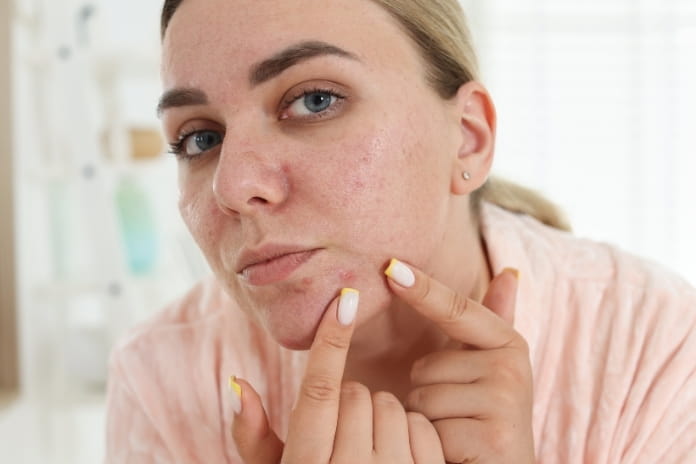
See a dermatologist if your pimples persist beyond 8 weeks of OTC treatment, cause scarring, or include deep, painful cysts. A dermatologist can prescribe treatments like retinoids, oral antibiotics, or cortisone injections that drugstore products simply cannot match.
You’ve tried the salicylic acid wash. The benzoyl peroxide spot treatment. The viral TikTok serum that promised clear skin in seven days. And yet, the pimples stay put sometimes getting worse.
If that sounds familiar, you’re not alone. Acne affects up to 50 million Americans annually, making it the most common skin condition in the United States, according to the American Academy of Dermatology (AAD). But here’s what most people don’t know: not all breakouts respond to drugstore solutions and waiting too long to see a dermatologist can lead to permanent scarring.
This guide breaks down the exact signs that your skin needs professional care, what a dermatologist can do that a serum cannot, and how to prepare for your first appointment.
Pimples vs. Chronic Acne: What’s the Difference?
A single pimple before a big event? That’s a breakout. Recurring blemishes that don’t clear up, spread across multiple areas of your face, or leave marks behind? That’s likely chronic acne and the two require very different approaches.
Temporary breakouts are usually triggered by hormonal fluctuations, stress, or a new skincare product. They tend to resolve on their own within one to two weeks with gentle cleansing and targeted OTC treatments.
Chronic acne is persistent, often inflammatory, and can involve multiple lesion types whiteheads, blackheads, papules, pustules, and deep cystic nodules. This type doesn’t just sit on the surface; it can penetrate deeper layers of skin and cause long-term damage.
| OTC Fixable | Requires a Dermatologist |
| Occasional blackheads or whiteheads | Deep, painful cystic nodules |
| Mild hormonal breakouts | Acne that leaves scars or dark marks |
| Surface-level pimples that clear within 2 weeks | Breakouts that persist beyond 8 weeks |
| One or two spots at a time | Widespread or recurring inflammation |
| No impact on self-confidence or daily life | Emotional distress tied to skin concerns |
5 Warning Signs It’s Time to See a Dermatologist

1. Over-the-counter products have failed after 6–8 weeks
Most OTC acne products need time to work but 6 to 8 weeks is the industry-standard trial window. If your skin shows no meaningful improvement after consistent use, the product isn’t the problem. The type of acne you have may require prescription-strength intervention.
2. Your pimples are leaving permanent scars or dark spots
Post-inflammatory hyperpigmentation (dark marks) and atrophic scarring (pitted skin) are signs that your acne is causing deeper tissue damage. These don’t fade quickly on their own, and preventing more from forming requires dermatologist-level treatment not another spot treatment.
3. You’re experiencing deep, painful nodules or cysts
Nodular and cystic acne form beneath the skin’s surface and don’t respond to topical products designed for surface-level breakouts. Trying to pop or treat these at home can worsen inflammation and significantly increase the risk of scarring.
4. The breakouts are affecting your mental health and self-esteem
Acne doesn’t just affect your skin it affects how you move through the world. Research published in the British Journal of Dermatology has linked acne to elevated rates of anxiety, depression, and social withdrawal. If your skin is influencing how you feel about yourself, that alone is reason enough to seek care.
5. Breakouts started suddenly after a medication change or dietary shift
Sudden acne onset particularly along the jawline or body can signal a hormonal imbalance or a reaction to a new medication. Certain drugs, including corticosteroids, lithium, and some contraceptives, are known to trigger acne flares. A dermatologist can identify whether an underlying cause is at play.
What Can a Dermatologist Do That You Can’t?
Dermatologists have access to a clinical toolkit that goes far beyond what sits on pharmacy shelves.
Prescription-strength topicals and oral medications
- Retinoids (like tretinoin): Accelerate skin cell turnover and prevent clogged pores at the source
- Oral antibiotics (like doxycycline): Reduce acne-causing bacteria and inflammation from the inside
- Spironolactone: A hormone-regulating medication particularly effective for adult women with hormonal acne
- Isotretinoin (Accutane): Reserved for severe or treatment-resistant acne; considered the most powerful oral acne medication available, with high long-term clearance rates
In-office procedures
- Cortisone injections: A diluted steroid is injected directly into a cyst, often reducing swelling within 24 to 48 hours—ideal before a major event
- Chemical peels: Exfoliate the skin at a controlled depth to clear pores, reduce oiliness, and fade post-acne marks
- Laser and light therapy: Targets acne-causing bacteria or reduces oil gland activity; often used in combination with other treatments
The key advantage of dermatologist-led care is customization. Rather than applying a blanket solution, your doctor will identify your specific acne type, severity, and skin profile then build a plan around it.
What to Expect at Your First Acne Appointment
First-time dermatology visits can feel intimidating. Knowing what to expect makes the experience much smoother.
How to prepare:
- Arrive makeup-free, or as close to it as possible, so the dermatologist can assess your skin directly
- Write down every product in your current skincare routine cleansers, serums, SPF, makeup and bring the list
- Note how long you’ve had acne, where it appears, and whether anything seems to trigger it (stress, certain foods, your cycle)
What your dermatologist will assess:
- The type and severity of your acne lesions (comedonal, inflammatory, cystic, or a combination)
- Your skin type (oily, dry, combination, or sensitive)
- Your medical history, including any medications you currently take
- Your skincare history what you’ve tried, for how long, and how your skin responded
From there, most dermatologists will propose a phased treatment plan, often starting with one or two interventions before adding more if needed. Don’t be discouraged if your skin takes a few weeks to respond prescription treatments, like retinoids, often cause an initial adjustment period before improvement sets in.
Frequently Asked Questions About Pimples and Dermatologist Care
Can a dermatologist clear severe pimples permanently?
Yes. While acne cannot be fully “cured,” dermatologists can design custom treatment plans that keep your skin clear long-term and significantly reduce the risk of future scarring. Many patients achieve lasting results with the right combination of treatments.
How much does it cost to see a dermatologist for pimples?
Costs vary. Many health insurance plans cover dermatologist visits for acne if it is deemed medically necessary. Self-pay visits typically range from $100 to $200 per appointment, not including the cost of prescriptions or in-office procedures.
Will a dermatologist pop my pimples?
A dermatologist may perform sterile acne extractions or administer cortisone injections to safely clear clogged pores and reduce swelling without the scarring risk that comes from at-home attempts.
How long does dermatologist acne treatment take to work?
Most prescription treatments require 8 to 12 weeks before significant improvement is visible. Isotretinoin courses typically run 4 to 6 months. Faster results are possible with in-office procedures like cortisone injections.
Is acne severe enough to see a dermatologist, or should I keep trying OTC products?
If you have been using OTC products consistently for 6 to 8 weeks without improvement or if you have cystic acne, scarring, or emotional distress related to your skin it is time to see a dermatologist. Early professional intervention reduces the risk of permanent scarring.
Stop Guessing Your Skin Deserves Better
Persistent acne isn’t a willpower problem or a skincare routine problem. It’s often a medical one. The sooner you get a professional assessment, the sooner you can stop cycling through products that weren’t designed for your skin in the first place.
If this guide helped clarify things, share it with someone who’s been struggling with stubborn breakouts or take the next step and book a consultation with a board-certified dermatologist in your area today. Your skin has been patient long enough.
If this guide helped clarify things, share it with someone who’s been struggling with stubborn breakouts or take the next step and book a consultation with a board-certified dermatologist in your area today. Your skin has been patient long enough—let Trusted Topics help you find the clarity you deserve, whether you are managing skin health or exploring other clinical resources like the strepto penicillin injection uses guide.
The same threshold applies to acne: if breakouts persist despite consistent care, it is time to see a dermatologist rather than continuing to guess at over-the-counter fixes.