


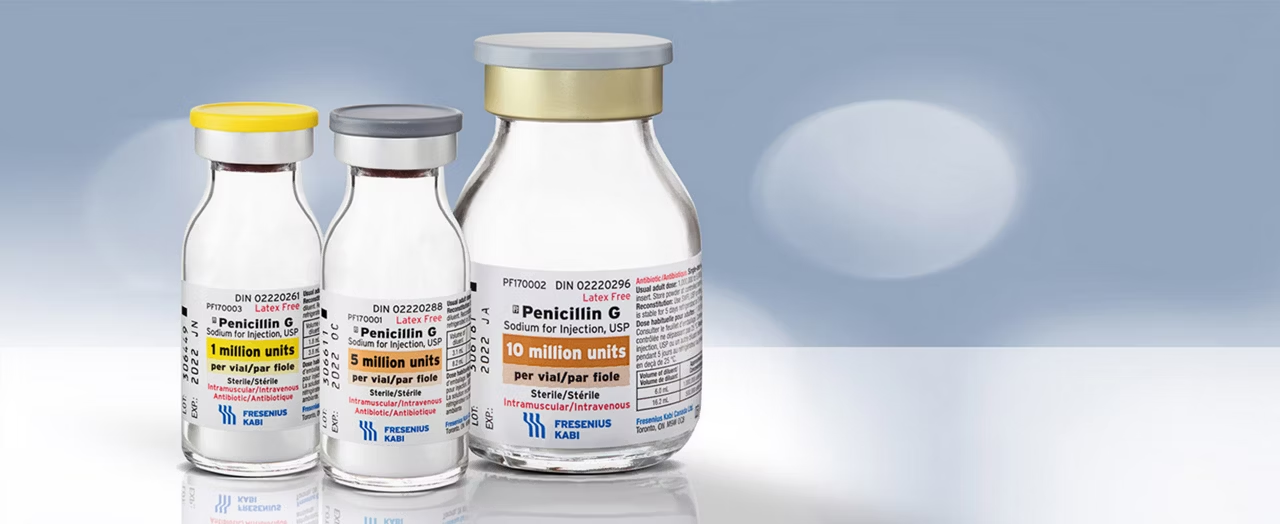
Strepto penicillin is a synergistic antimicrobial combination that pairs penicillin (a cell-wall synthesis inhibitor) with streptomycin (a protein synthesis disruptor) to achieve broad-spectrum bactericidal activity against both Gram-positive and Gram-negative pathogens. It is used in veterinary medicine and laboratory cell culture never in humans.
Monotherapy often fails against complex, polymicrobial infections. A single antibiotic may neutralize one class of bacteria while leaving a co-infecting strain completely untouched, allowing the secondary pathogen to proliferate unchecked. This pharmacological gap is precisely where strepto penicillin earns its place not as a workaround, but as a deliberately engineered synergy between two mechanistically distinct antimicrobials that dismantle bacterial survival at two separate biological levels simultaneously.
This post is structured for veterinary clinicians, laboratory technicians, and agricultural specialists who need technically precise, clinically actionable information. By the end, you will understand the molecular basis of this combination’s efficacy, how it is applied across livestock and cell culture contexts, what the critical safety thresholds are, and when it becomes genuinely dangerous.
How Do Penicillin and Streptomycin Work Together at the Molecular Level?
The combination exploits a biological cascade. Penicillin moves first.
The Attack on the Wall
Penicillin inhibits D-alanine transpeptidase, the enzyme responsible for cross-linking the peptidoglycan chains that give bacterial cell walls their structural rigidity. Without functional cross-linking, the wall becomes mechanically compromised. Actively dividing bacteria, which are under intense osmotic pressure, cannot maintain membrane integrity and undergo osmotic lysis. This process is selective to prokaryotes mammalian cells lack peptidoglycan entirely, which is why penicillin causes minimal host-cell toxicity at therapeutic doses.
The Internal Breach
Here is where the synergy becomes pharmacologically elegant. The structurally weakened cell wall dramatically increases membrane permeability. Streptomycin, an aminoglycoside that normally struggles to penetrate intact bacterial membranes efficiently, exploits this permeability breach to access the bacterial cytoplasm at higher concentrations than it could achieve alone.
Once inside, streptomycin binds irreversibly to the 30S ribosomal subunit specifically to the S12 protein encoded by the rpsL gene. This binding causes mRNA misreading: the ribosome incorporates incorrect amino acids into nascent proteins, producing dysfunctional, often toxic peptides. The bacterium cannot recover from irreversible 30S binding the way it might from a bacteriostatic drug. Protein synthesis halts. The cell dies.
The Result
Together, penicillin and streptomycin achieve bactericidal activity against both Gram-positive organisms (such as Clostridium chauvoei, the causative agent of blackleg) and Gram-negative pathogens (including Mannheimia haemolytica, the primary driver of shipping fever pneumonia) coverage that neither drug reliably achieves in isolation.
Where Is Strepto Penicillin Used? Veterinary Medicine vs. Cell Culture
Livestock and Farm Animal Treatment
In veterinary practice, strepto penicillin suspension is administered via deep intramuscular (IM) injection and is indicated for a range of systemic and soft-tissue bacterial infections:
- Shipping fever (bacterial pneumonia): A major economic concern in feedlot cattle, often caused by Mannheimia haemolytica following stress-induced immunosuppression during transport.
- Blackleg: A rapidly fatal clostridial myositis in cattle and sheep caused by C. chauvoei, where early parenteral intervention is critical.
- Mastitis: Bacterial infection of the mammary gland, most commonly caused by streptococcal and staphylococcal species in dairy cattle.
- Deep foot rot (Foul-of-the-Foot): A necrotic infection of the interdigital skin and underlying tissue, frequently polymicrobial in etiology.
The combination is used across cattle, swine, sheep, goats, and horses. The IM route is non-negotiable this distinction is not merely procedural, and the reason why is addressed in the contraindications section below.
Laboratory Cell Culture Applications (Pen/Strep Solutions)
In research settings, penicillin-streptomycin (Pen/Strep) solution is a standard sterile-filtered 100x supplement added to mammalian cell culture media. Its function is prophylactic rather than therapeutic: it prevents bacterial contamination of cultures during incubation.
Critically, Pen/Strep is selected for cell culture specifically because penicillin and streptomycin do not interfere with eukaryotic cellular morphology, proliferation, or gene expression at standard concentrations their targets (peptidoglycan synthesis and prokaryotic 30S ribosomes) simply do not exist in mammalian cells. However, researchers working with mycoplasma-sensitive assays or differentiation protocols should note that streptomycin can occasionally affect mitochondrial function at elevated concentrations, since mitochondrial ribosomes share structural similarities with bacterial 70S ribosomes.
Veterinary Dosages and Mandatory Withdrawal Periods
Accurate dosing is not optional with an aminoglycoside-containing product. Streptomycin accumulates in tissues, making adherence to withdrawal periods a food-safety and regulatory requirement, not merely a precaution.
| Target Animal | Standard Empirical Dosage | Milk Withdrawal Period | Meat Withdrawal Period |
| Cattle / Horses | 1 ml per 20–25 kg body weight, daily | 72 hours | 30 days |
| Sheep / Swine | 1 ml per 10 kg body weight, daily | 72 hours | 30 days |
Treatment should not exceed the duration specified on the product label or as directed by a licensed veterinarian. Extending treatment to resolve stubborn infections without reassessing the causative organism substantially increases the risk of aminoglycoside-related toxicity.
Critical Contraindications and Toxicity Risks
Nephrotoxicity and Ototoxicity from Streptomycin Accumulation
Streptomycin belongs to the aminoglycoside class, a group notorious for concentration-dependent toxicity. The drug accumulates preferentially in the renal proximal tubular cells and the endolymph of the inner ear. Prolonged exposure or supratherapeutic dosing risks irreversible kidney damage and vestibular dysfunction the latter presenting as ataxia and loss of balance in affected animals.
Renal clearance monitoring is advisable in animals with pre-existing kidney compromise. Aminoglycosides are renally cleared; any reduction in glomerular filtration rate extends the drug’s half-life and raises systemic exposure disproportionately.
The Intravenous Administration Warning
Strepto penicillin suspension must never be administered intravenously. This is not a dosing adjustment it is an absolute contraindication. The formulation is an aqueous suspension of microcrystalline particles. IV injection of particulate suspensions causes immediate mechanical obstruction of small vessels, thrombophlebitis, and can trigger a rapid anaphylactic cascade due to the sudden systemic exposure of procaine penicillin’s procaine component. Fatalities have been documented. IM injection only.
Use in Pregnant Animals
Procaine penicillin carries documented risks in pregnant sows, where it has been associated with stress-mediated abortions. Any clinical decision to administer strepto penicillin to a pregnant animal must be made by a licensed veterinarian who has evaluated whether the treatment benefit substantively outweighs the reproductive risk.
Frequently Asked Questions About Strepto Penicillin Injection
Can strepto penicillin be used to treat human bacterial infections?
No. Fixed-ratio strepto penicillin suspensions are manufactured exclusively for veterinary and laboratory use. While penicillin and streptomycin are each used in human medicine under separate formulations, the specific toxicity profiles of fixed-ratio veterinary suspensions including the procaine component make them unsuitable and unapproved for human therapeutic use.
Why is shaking the vial before drawing a dose necessary?
Strepto penicillin is formulated as an aqueous suspension, not a solution. The active antibiotic crystals sediment over time. Without vigorous shaking immediately before use, the drawn dose may be disproportionately liquid (under-dosed) or crystal-heavy (over-dosed), compromising both efficacy and safety.
What should be done if a pregnant animal requires strepto penicillin treatment?
Contact a veterinarian before administration. Procaine penicillin has documented potential to induce stress-related abortions in certain livestock species, particularly sows. A licensed clinician must weigh the severity of the infection against the reproductive risk for that specific animal.
How does streptomycin resistance develop, and can it be prevented?
Resistance typically develops through chromosomal mutations in the rpsL gene the same gene encoding the 30S ribosomal S12 protein that streptomycin targets or via acquisition of aminoglycoside-modifying enzyme genes through horizontal gene transfer. Avoiding subtherapeutic dosing, completing the full treatment course, and performing culture-and-sensitivity testing before initiating therapy all reduce selective pressure for resistant mutants.
Strepto Penicillin Remains a Cornerstone Used Correctly
Decades after its introduction, the penicillin-streptomycin combination retains genuine clinical relevance because the underlying pharmacological logic sequential wall disruption followed by ribosomal breach remains sound. No newer antibiotic has rendered that mechanism obsolete in veterinary practice.
The combination is not without risk. The nephrotoxicity profile of streptomycin, the intravenous administration hazard, and the reproductive concerns in pregnant livestock demand disciplined, protocol-driven use rather than empirical escalation. For clinicians and researchers who understand its pharmacology, however, strepto penicillin remains one of the most reliable broad-spectrum tools in agricultural and laboratory medicine—just as taking a timely, evidence-based approach to personal healthcare is essential when knowing when to make the call for dermatologist care for pimples.
Want deeper dives into veterinary pharmacology, antimicrobial resistance mechanisms, and clinical protocols? Subscribe to our clinical archive newsletter to receive rigorously sourced content directly to your inbox or explore our full veterinary pharmacology series for advanced clinical guidance.